WILLIAMSTOWN, MASS.- The Clark Art Institute presents the first solo museum exhibition in the United States of artist Giorgio Griffa (born in 1936 in Turin, Italy, where he lives and works). Giorgio Griffa: Paths in the Forest is on view June 13 through October 12, 2026 in the galleries of the Lunder Center at Stone Hill.
Published by the Clark and distributed by Yale University Press,
the exhibition catalogue includes four scholarly essays, an original text by the artist, and studio and installation photography highlighting the exhibition’s close dialogue with the architecture and natural setting of the Lunder Center at Stone Hill. The catalogue contributors are: Joanna Fiduccia, assistant professor in the history of art at Yale University; Matilde Guidelli-Guidi, curator and department cohead at Dia Art Foundation; Kate Nesin, art historian, writer, and curator-at-large for the Art Institute of Chicago; and exhibition curator, Robert Wiesenberger.
Artdaily Recommended · Paid Link
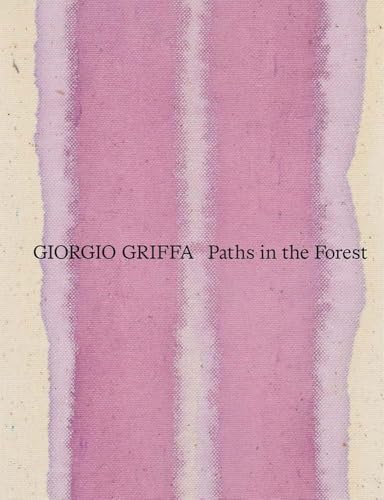
Giorgio Griffa: Paths in the Forest
Edited by Robert Wiesenberger
A vividly illustrated catalogue on Giorgio Griffa’s lyrical paintings, tracing nearly sixty years of lines, colors, numbers, and poetic abstraction.
See it on Amazon → As an Amazon Associate I earn from qualifying purchases.
THE EXHIBITION
For almost sixty years, Giorgio Griffa has explored the potential of painting in a practice that is both rigorous and lyrical. Griffa paints with diluted acrylics in pastel colors on unstretched, unprimed canvases. These are tacked to the wall for display and folded for storage, a memory of which persists in their creases. Griffa values “the intelligence of materials” and views his paintings as neither representational nor abstract, but as real, material facts.
“Impersonal marks that belong to any hand, with thousands of years of memory” are Griffa’s subject; he follows and blurs the lines of drawing, counting, and writing. Griffa “interrupts” his paintings before they are finished because, “in the meantime, life has moved on,” an idea he credits to Zen Buddhism. Like the artist himself, each work remains vital: “Leaving the work incomplete means symbolically omitting that final point, which, like the period at the end of this sentence, fixes it in the past.”
To date, Griffa has made thirteen cycles, or loose and connected bodies of work, each with its own compositional idea. He calls these “different pathways through the same dark forest.” The forest, for him, is a symbol of the unknown. But it also exemplifies Griffa’s ecological ethic: his commitment to growth and change, difference and interrelation, vitality and intelligence. There is no single path for him, nor intention to escape; the unknown is a place to dwell, in pensive darkness and exultant light.
Giorgio Griffa: Paths in the Forest is organized by the Clark Art Institute and curated by Robert Wiesenberger, John and Barbara Vogelstein Senior Curator of Contemporary Art at the Brooklyn Museum, former curator of contemporary projects at the Clark.
EXHIBITION HIGHLIGHTS
Sessanta frammenti (Sixty fragments), 1980
Sessanta frammenti, which can be configured differently with each installation, extends across the walls of the entrance corridor in the exhibition. “These fragments,” Griffa explains, “are not the remains of a broken whole, they are not archaeological finds, pieces of something once united. On the contrary, they are born one by one, like our perceptions.” For the artist, fragmentation describes the state of our modern, scientific knowledge, a departure from Newton’s perfect and rational universe.
Rosa (Rose), 1968
This never-before-exhibited painting marks Griffa’s defining shift beyond representation. Rosa, in Italian, refers to both the flower (“rose”) and the color pink; from left to right, Griffa paints a bouquet of roses, a Pop-art-style rendition of them, and finally diagonal lines in black, green, and pink. Lines have occupied the artist’s attention ever since.
Narciso (Narcissus), 1986
Griffa alludes to the Greek myth of Narcissus, in which a beautiful youth falls in love with his own reflection, dies of sadness, and is replaced by flower which take his name (also known as a daffodil). The story has long been considered a metaphor for artists’ attempts to capture fleeting beauty in an image.
Narciso belongs to Griffa’s cycle Segno e campo (Sign and field), in which he juxtaposes large areas of color with rhythmic marks. An admirer of Henri Matisse and Islamic art, Griffa has written: “Decoration can be structural, because it, too draws on rhythm, a means of knowledge.”
Canone aureo 958 (Agnes Martin) (Golden ratio 958 [Agnes Martin]), 2016
The golden ratio, also known as the “divine proportion,” is an irrational number that begins 1.618…. For Griffa, it symbolizes the unknown, which he considers the domain of art, and became the subject of its own cycle in 2008.
The quotation here, from an essay by painter Agnes Martin titled the “Untroubled Mind,” reflects a spirituality indebted to Zen Buddhism. Lightness and luminosity, mindful presence and disciplined practice, are central to Griffa’s approach. In addition to his “anonymous marks,” since 1979 Griffa has paid homage to artists he considers formative in a cycle he calls Alter Ego. This work was made for the 2017 Venice Biennale, Griffa’s third time appearing in the international exhibition.
Kaddish, 2024
Phrases from Allen Ginsberg’s epic poem, dedicated to the memory of his mother and named for the Jewish mourner’s prayer, appear on twenty-two pieces of gauzy fabric (known as tarlatan). The work belongs to Griffa’s Alter Ego cycle as well as his Transparenze (Transparencies), which he debuted at the 1980 Venice Biennale. These works are layered, as Griffa notes, like parts of a symphony, and may be installed differently on every occasion.
Disordine PF (Disorder PF), 2025
Griffa’s most recent cycle is dedicated to disorder, a phenomenon measured by scientists as entropy. Rather than a fear of chaos and the unknown, Griffa embraces change and renewal. Any disorder, he has written, “will constitute a new order, which in turn contains elements of disorder, which go on to constitute a new order—and so on and so forth without end.” Even in this darkness, there is light.
THE ARTIST
Giorgio has long been a celebrated figure in Italian art. While he exhibited alongside figures in the Turin-based Arte Povera movement, and is often presented in the context of Minimalism, his approach is distinctive. Giorgio Griffa has been the subject of numerous international exhibitions, including at the Centre Pompidou, Paris, and the Camden Arts Centre, London, and has been featured in three editions of the Venice Biennale. His first museum presentation in the U.S. marks a major milestone for an artist long in dialogue with American art and artists.
Artdaily participates in the Amazon Associates Program, an affiliate advertising program designed to provide a means for us to earn commissions by linking to Amazon.com and affiliated sites. When you purchase through our links, we may earn a small commission at no additional cost to you. These commissions help us continue curating and sharing the art world’s latest news, stories, and resources with our readers.







