MADRID.- The Museo Nacional del Prado is offering visitors a new way to read its permanent collection through the thematic itinerary “The Council of State and the Prado Museum,” organized in collaboration with Spain’s Council of State to mark the institution’s fifth centenary.
Artdaily Recommended · Paid Link
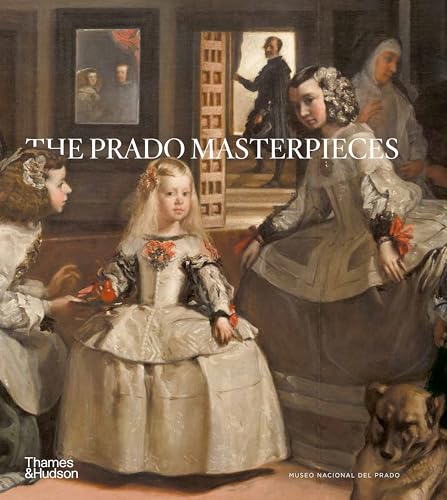
The Prado Masterpieces: Museo Nacional del Prado
A major art book from one of the world’s great museums
A richly illustrated volume celebrating masterpieces from the Prado, with iconic works from Spain’s extraordinary museum collection.
See it on Amazon → As an Amazon Associate I earn from qualifying purchases.
On view until September 20, 2026, the route brings together 13 works that span five centuries of Spanish political, institutional, and cultural history. Through portraits of figures connected to the Council of State, the Prado explores how portraiture functioned not only as an artistic genre of exceptional importance, but also as a powerful instrument for representing authority, influence, service, and public memory.
The itinerary begins with one of the defining images of 16th-century portraiture: Titian’s portrait of Emperor Charles V with a dog. Although the origins of the Council of State date back to 1521, Charles V decisively transformed the institution in 1526 in Granada, giving greater prominence to Spanish advisers within the broader imperial structure. That date is being used as the starting point for the Council’s fifth-centenary commemorations.
From there, the route moves through some of the most compelling portraits of power in the Prado’s collection. Three major examples of Baroque court portraiture form a central part of the itinerary: Peter Paul Rubens’s equestrian portrait of the Duke of Lerma, Diego Velázquez’s Gaspar de Guzmán, Count-Duke of Olivares, on Horseback, and Juan Carreño de Miranda’s portrait of the Duke of Pastrana. Together, these works illuminate both the political significance of their sitters and the extraordinary development of Spanish portraiture under the influence of Venetian and Flemish models.

The 18th century is represented by leading figures of Enlightenment Spain, including the Marquis of Ensenada, painted by Jacopo Amigoni, and the Count of Floridablanca and Gaspar Melchor de Jovellanos, both portrayed by Francisco de Goya. In these works, portraiture begins to communicate not only rank and authority, but also reformist ideas, intellectual ambition, and a changing understanding of public service.
The itinerary then continues into the 19th century, when the image of public figures expanded through new formats and techniques. Antonio María Esquivel’s group portrait The Contemporary Poets. A Reading of Zorrilla in the Painter’s Studio brings together several writers who were also members of the Council of State, including the Duke of Rivas, Javier de Burgos, Francisco Martínez de la Rosa, Ramón de Campoamor, and Pedro de Madrazo. The selection also includes works linked to Romanticism and naturalism, as well as examples of lithography and photography, showing how portraiture became more widely circulated in the modern era.
Among the figures included in the route are Manuel de Seijas Lozano, minister of Commerce, Education, and Public Works; Víctor Balaguer, a major literary and political figure of the Catalan Renaixença; Francisco Martínez de la Rosa, who became the first president of the Council of State after the restoration of its name in 1858; and Pedro de Madrazo, art historian, writer, and author of an important 1843 catalogue of the Prado’s paintings.
Beyond its commemorative purpose, the itinerary reflects one of the Prado’s broader ambitions: to activate its permanent collection through new narratives that connect art with history, politics, and culture. By placing works from different centuries in dialogue, the museum invites visitors to see familiar portraits from a new perspective, not only as images of distinguished individuals but as living records of institutional continuity and public representation.
The Council of State, one of the oldest institutions in Spanish history, becomes the thread that connects these works. Through the faces of emperors, ministers, advisers, writers, and statesmen, the itinerary reveals a story of power, memory, and service that unfolds across the museum’s galleries.
As part of the program, the Prado has also organized a series of lectures in its auditorium. Javier Barón Thaidigsmann, head of 19th-century painting at the Prado, will discuss portraits of members of the Council of State in the museum on June 27. On July 1, Leopoldo Calvo-Sotelo Ibáñez-Martín, Secretary General of Spain’s Council of State, will speak on the Council, the arts, and letters. The cycle concludes on September 23 with a lecture by Santiago Muñoz Machado, director of the Royal Spanish Academy and ex officio State Councillor.
With “The Council of State and the Prado Museum,” the Prado once again demonstrates how its collection can be approached from multiple angles. In this case, the portraits become more than works of art: they become witnesses to a shared history between painting and institution, image and authority, memory and state.







